
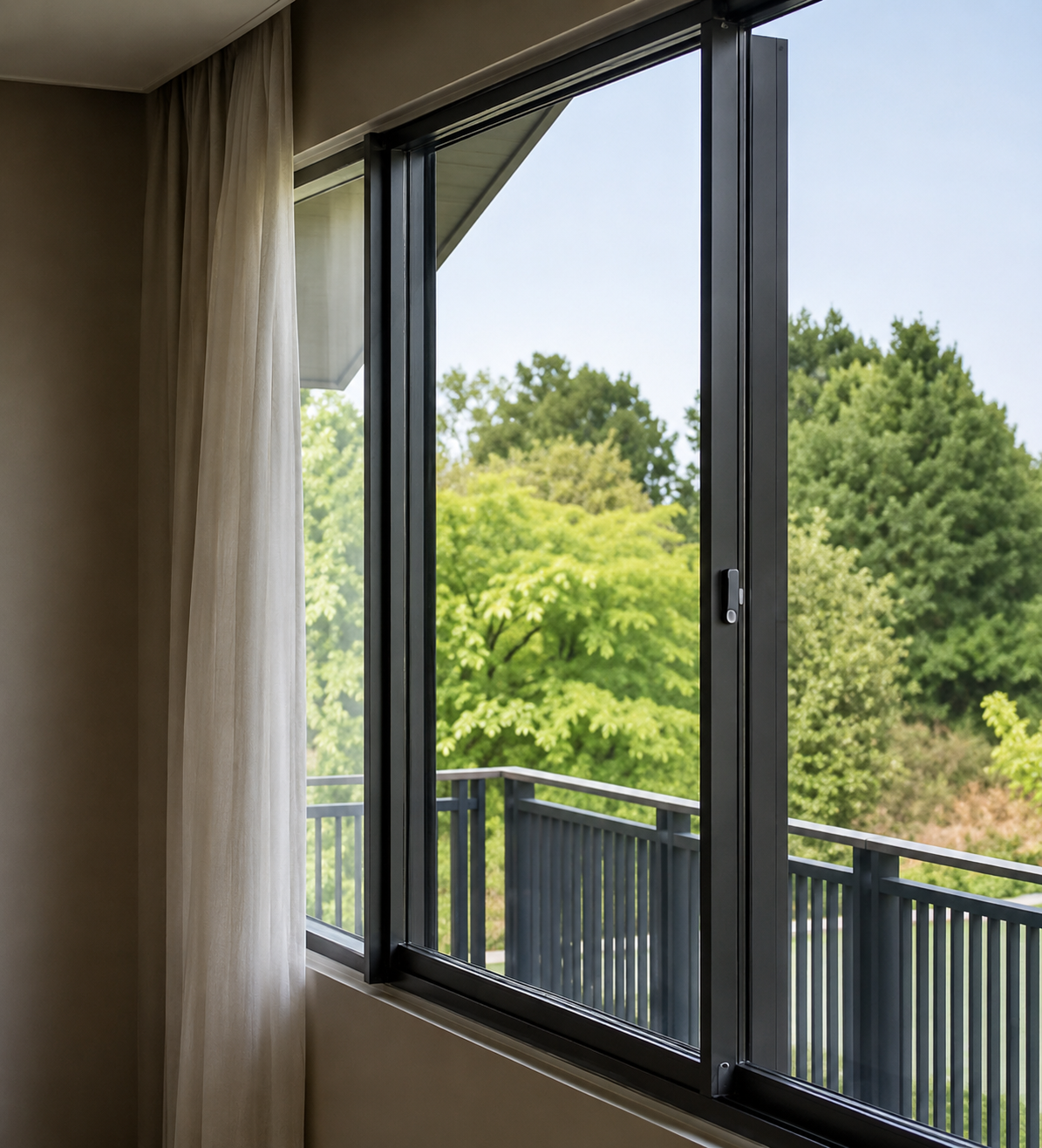
Sliding vs Casement Windows: Choosing the Right One for Each Room
Sliding and casement windows solve different problems — one is about smooth, space-saving operation, the other about a full opening and a tighter seal. Here's how to decide which belongs where.
Sliding windows move horizontally along a track, which means they never swing into or out of a room. That makes them a natural choice for balconies, corridors, and any space where furniture or foot traffic sits close to the window — nothing to duck under or work around.
Casement windows hinge open like a door, giving a full, unobstructed opening and a tighter seal when closed, since the sash presses directly against the frame instead of sliding past a track. That makes them better suited to rooms where ventilation and airtightness matter more than floor-space efficiency — bedrooms and study rooms, for instance.
There's also a maintenance angle: sliding tracks need occasional cleaning to stay smooth, while casement hardware — hinges and handles — is what tends to need attention over time. Neither is more work than the other, just a different kind of upkeep.
In practice, most homes end up using both — sliding where space is tight or the view matters most, casement where ventilation and seal quality come first. It's rarely an either-or decision across an entire home.